Kimia Gowaran Lead and Zinc Mining Company began its operations in 2000 under the name "Koohbanan Rooy-e Kerman".
Over the years, the company has conducted mining activities in various regions across the country, including Kerman and Zanjan. In December 2016, a strategic agreement for the operation of the Nakhlak Lead Mine was signed with the Iranian Ministry of Industry, Mine and Trade's subsidiary, Iran Mineral Procurement and Production Company (IMPASCO). Furthermore, the company's workforce has grown from 153 employees at the beginning of the contract to 800 employees at present.

Company Overview
Over the years, the company has carried out mining activities in various regions across the country, including Kerman and Zanjan. In December 2016, a strategic operating agreement for the Nakhlak Lead Mine was signed with the Iran Mineral Procurement and Production Company (IMPASCO). Furthermore, the company's workforce has grown from 153 employees at the beginning of the contract to 800 employees today.
The mine's old flotation plant, one of the oldest in Iran, was established in 1951 and had a maximum annual production capacity of 2,000 tonnes of concentrate.
Examples of operational challenges at the beginning of the company's operations:
A sharp decline in mine personnel to 153 people, along with uncertainty among employees about future job security
Depleting mine reserves, with only 140,000 tonnes remaining down to a depth of 240 metres
Worn-out and obsolete equipment
Reliance on outdated extraction methods
The mine operating at a loss and being on the verge of closure
Following this period, over the course of eight years, the old, dilapidated plant underwent major overhauls and increased its production capacity to over 700,000 tonnes per year. Subsequently, through the installation and commissioning of a heavy media plant, old tailings were recovered, and a new production line with an input capacity of 1,000 tonnes of ore per day and a concentrate production capacity of 15,000 tonnes per year was established.
Today, after constructing a new plant with a daily feed capacity of 2,000 tonnes, the company has successfully commissioned its first phase, with a capacity of 1,000 tonnes per day. Following the procurement of new machinery for ore extraction, preparations are underway to commission the second 1,000-tonne-per-day phase of the new plant.
Additionally, the number of employees at the mine has reached approximately 800 people. Given new development plans and remaining exploration potential, the workforce at both the mine and the new plant is expected to grow further.
The Nakhlak mine is one of the oldest active mines in Iran. Archaeological evidence indicates that extraction at this mine began at least as early as the Sassanid period (approximately 1,500–1,800 years ago). At that time, lead and silver held great value due to their use in coin minting, tool making, and ornamentation.
Following the advent of Islam, the Nakhlak mine remained active. Historical texts record that silver extracted from this region was used for minting coins and, on occasion, for paying tribute and taxes.
During the Safavid period, the importance of the Nakhlak mine increased once again, as the central government required precious metals. However, in the late Safavid era and during some periods of the Qajar dynasty, mining activity declined due to insecure trade routes and the difficulty of extraction.
During the Pahlavi period, the mine was semi-industrially reconstructed and, equipped with newer machinery, was for a time considered one of the country's important sources of lead. But over time, as economic viability decreased, industrial extraction at the mine declined.
In the 1980s and earlier, the mine was known as a village, employing 700 workers and having a population of approximately 2,000 people. Facilities such as a school and other amenities were also available in the area.

During the Pahlavi era, the mine was reconstructed on a semi-industrial scale and, equipped with newer machinery, was considered one of the country’s important sources of lead for a period of time. However, as time passed and its economic viability declined, industrial extraction at the mine decreased.

In the 1980s and earlier, the mine was known as a village, employing 700 workers and having a population of approximately 2,000 people. Facilities such as a school and other amenities were also available in the area.

Kimia Goharan Lead and Zinc Mining Company began its operations in 2000 under the name “Koohbanan Rooy-e Kerman”. Over the years, the company has conducted mining activities in various regions across the country, including Kerman and Zanjan.
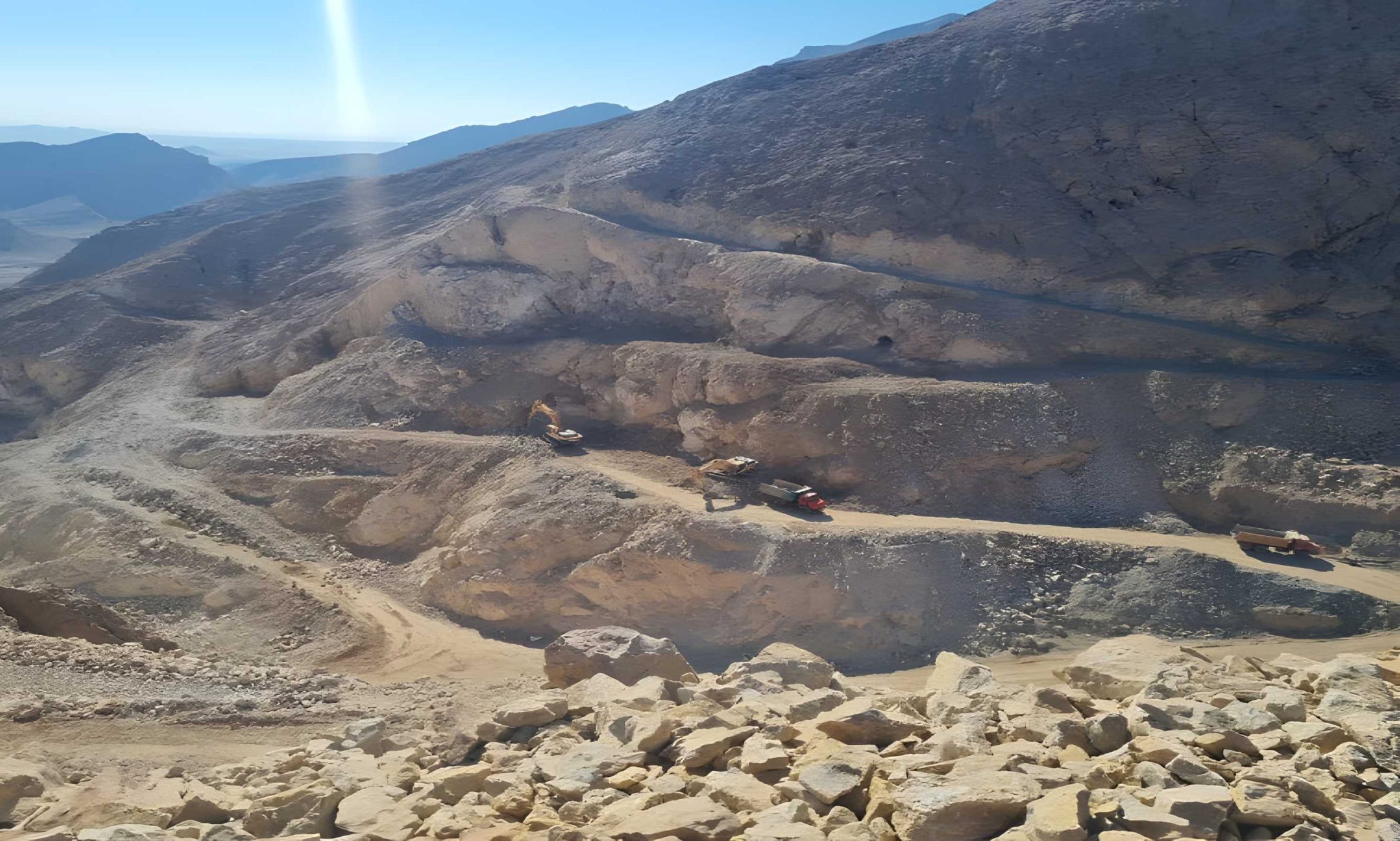
In December 2016, a strategic operating agreement for the Nakhlak Lead Mine was signed with the Iran Mineral Procurement and Production Company (IMPASCO). Furthermore, the company’s workforce has grown from 153 employees at the beginning of the contract to 800 employees today.

At present, after constructing a new plant with a daily feed capacity of 2,000 tonnes, the company has successfully brought online the first phase with a capacity of 1,000 tonnes per day. Following the acquisition of new machinery for the extraction of feed material, necessary measures are being taken to launch the second 1,000-tonne-per-day phase of the new plant.

During the Pahlavi era, the mine was reconstructed on a semi-industrial scale and, equipped with newer machinery, was considered one of the country’s important sources of lead for a period of time. However, as time passed and its economic viability declined, industrial extraction at the mine decreased.

In the 1980s and earlier, the mine was known as a village, employing 700 workers and having a population of approximately 2,000 people. Facilities such as a school and other amenities were also available in the area.

Kimia Goharan Lead and Zinc Mining Company began its operations in 2000 under the name “Koohbanan Rooy-e Kerman”. Over the years, the company has conducted mining activities in various regions across the country, including Kerman and Zanjan.

In December 2016, a strategic operating agreement for the Nakhlak Lead Mine was signed with the Iran Mineral Procurement and Production Company (IMPASCO). Furthermore, the company’s workforce has grown from 153 employees at the beginning of the contract to 800 employees today.

At present, after constructing a new plant with a daily feed capacity of 2,000 tonnes, the company has successfully brought online the first phase with a capacity of 1,000 tonnes per day. Following the acquisition of new machinery for the extraction of feed material, necessary measures are being taken to launch the second 1,000-tonne-per-day phase of the new plant.